Africa’s Clean Energy Paradox(es)
Learning & Development: Maximising Investments in Clean Energy Projects
Room: : YES Conference 1
Time: 11:00
The clean energy landscape in Africa is engulfed in a series of paradoxes. The first being that while it carries the most certainty in the world regarding natural resources and renewable energy potential, the industry more generally carries unparalleled levels of uncertainty.
Uncertainty relating to currency, regulation, guarantees, risk, bankability, credibility, protection… the list goes on, and actively works against two key enablers that will be needed to maximise clean energy potential on the continent. Those being, startup innovation and private investment attraction.
But who’s to blame for this uncertainty?
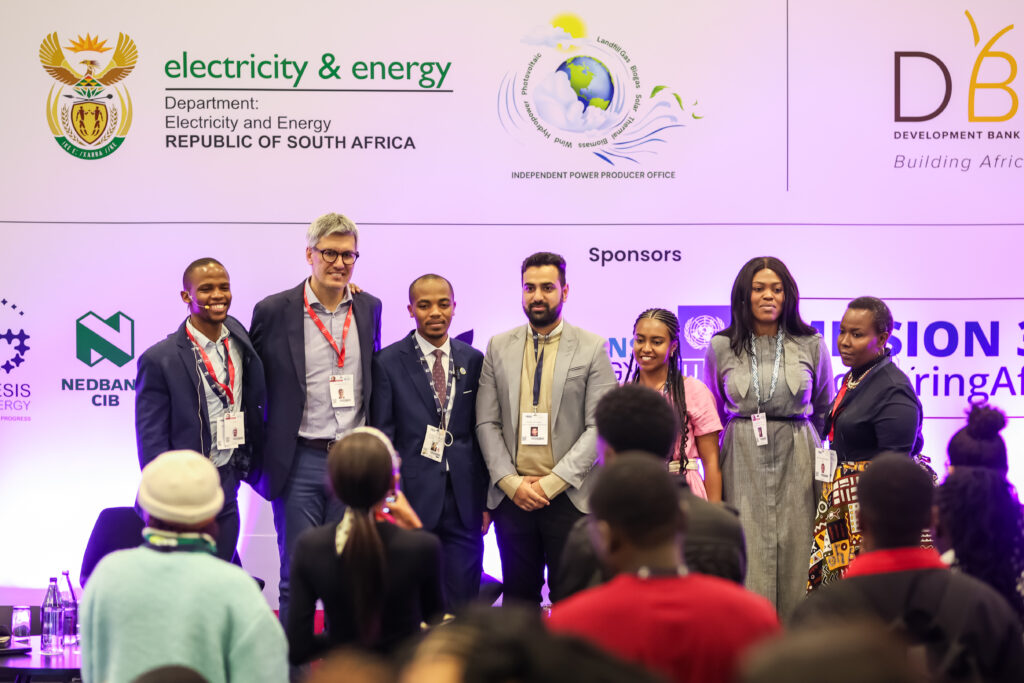
“When you think about accelerating projects at scale, you first think about governments,” said Andrea Bertello, Director Country Engagement & Partnerships, RELP. “They are in the driving seats, and are tasked with setting clear rules, long-term stable regulations, and building a clear plan for how to accelerate a sustainable energy transition.
“The key to changing the pace of how energy projects are financed and built is to provide better clarity and transparency in the regulatory space, I believe. Everyone needs to know the rules of the game, and know that those rules won’t change once investment is put forward.”
This long-term outlook and stability would remove a large portion of risk that currently dissuades investors from entering a (in relative terms) nascent space.
And it is a relative nascency that explains the second paradox, too…
“Of all the global investment that goes into clean energy, only three percent comes to Africa. It should give us sleepless nights,” said Sani Musa Ibrahim, MSc Student, Dundee University.
Sani notes from his experiences in Europe that mechanisms ranging from green investment banks to currency bonds are hugely underutilised or underexplored in Africa presently, as ways to collaborate more effectively and remove some of that aforementioned risk. However, the biggest ingredient missing from the environment right now, he feels, is trust.
“Trust is absent. Trust in our institutions, in our developers, in our regulators, in our young people and startups. And it all comes down to government to provide an environment that fosters that trust,” he urged.
A final paradox exists in that the areas where clean energy would be most impactful are often in communities that don’t currently have access to electricity.
“It’s a sad paradox,” reflected Ebrahim Makda, Corporate Finance Principal, Thebe Investment Corporation. “It’s why one solution we encourage at Thebe is the model of an integrated approach and co-ownership. It reduces risk, and instils a sense of pride among communities around projects, which contribute to their long-term success.
“We look after the people in these communities while still retaining a small piece of the project to make it viable as an investment corporation.”
And that investment needs to ramp up if Africa is to fulfil its clean energy potential.
Rhoda Limbani Mshana, Chief Energy Sector Regulations Specialist, AfDB affirmed: “We need billions for the sector to grow, but money only flows when things are smooth. This means predictability, certainty, clarity, and transparent rules of the game that won’t change.
“As much as this initial framework must come from government, there is also a need to manage political interference. There is often a tension between policy makers and regulators but they both have a responsibility to society to work in unison for a more stable environment moving forward.”