
Undoing a Sector Lag and Powering Up South African Renewables
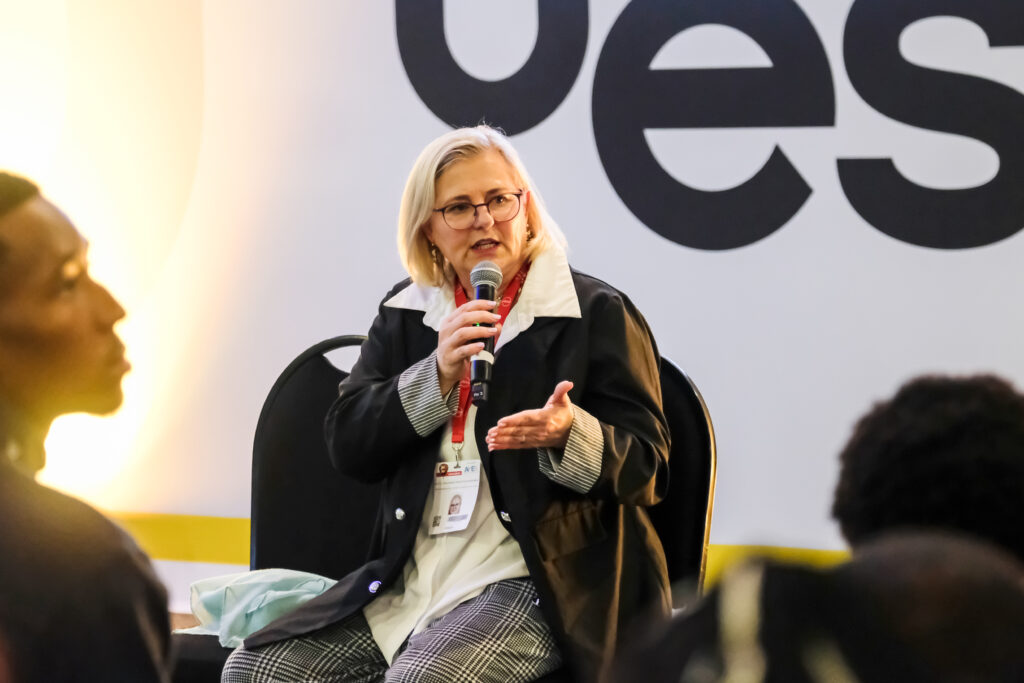
Ask the Expert: H.E. Honourable Samantha Graham Maré, Deputy Minister of Electricity & Energy, South Africa
Room: YES! Executive Hub
Time: 12.00
June saw the official unveiling of the South African Renewable Energy Masterplan (SAREM) which, in conjunction with its PowerUp initiative, is set to drive fresh impetus and momentum into the country’s energy future.
“SAREM will drive the development of businesses and force us to think about what our strengths are as a country,” noted Samantha Graham Maré, Deputy Minister of Electricity & Energy, South Africa. “What can we do in the manufacturing space, the component space, the services space, when it comes to renewable energy? How can we drive, fund, incubate and support those businesses?”
SAREM will serve as an overarching framework driving not just projects, but industrial growth, skills development, academic affiliations, tailormade programmes, and key partnerships as already epitomised by its close ties with EWSETA (The Energy & Water Sector Education Training Authority).
A standout intention behind the launch of SAREM is to overcome a lag that has formed in the country’s energy sector. A lag that, Maré believes, is quickly fixable if smart decisions are made, and if they can restore the same momentum demonstrated in years gone by.
She explained: “History shows us we are capable of having the best electricity industry, at least on the continent. There have been failures to evolve and to maintain and to build new, creating a lag between the development of Eskom, and the need to build new capacity.”
This capacity gap and ensuring universal access is high on the agenda, already plotting an increased deployment of microgrids, a more concerted push into solar, and more regulatory accountability, urging municipalities to distribute power in a more inclusive way.
From an infrastructure perspective at least, those intentions are already being converted to action.
Maré continued: “There are lots of new technologies out there, but the problem then becomes the grid. We need to build 14,000km of transmission lines which would cost about 450bn rand which we don’t really have in the bank account right now. But we’re starting with 1,164km which will reach financial close next year.”
Around 85% of South Africa’s energy is still coal-fired, making SAREM’s mission a bold and complex one. Investing in the country’s transmission infrastructure, deploying greater volumes of decentralised power sources, exploring greater diversity and the role of batteries and even nuclear energy, and underpinning all of this with renewed structural change via SAREM, is all being pointed towards its 2050 net zero target.
En route to that end goal, SAREM will also tick off some of the more immediate concerns to keep South Africa on a positive power path.
“We’re not out of the load shedding concern just yet, but are working day and night to get to a point where we are,” Maré confirmed and concluded.